Why Choosing the Right Distance Measurement Technology Matters
As automation accelerates across manufacturing, logistics, robotics, and industrial control, accurate distance measurement has become a core requirement rather than a complementary add-on. From AGV navigation to robotic positioning and high-speed production control, sensing technologies determine not only system performance but also operational safety.
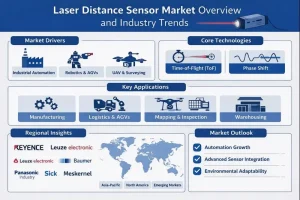
This report provides a clear, engineering-driven comparison of the most widely used distance measurement technologies—Laser, Ultrasonic, Radar, and the two dominant laser measurement principles: TOF (Time-of-Flight) and phase-based detection.
Insights are based on prevailing industry data, field applications, and performance characteristics exemplified by modern compact TOF-based laser modules widely deployed in automation systems, including models similar to Meskernel’s LDL-S series.
Overview of Common Distance Measurement Technologies
Distance measurement in automation typically relies on one of four sensing technologies:
Laser Distance Sensors
Laser sensors offer high accuracy, fast response times, and stable long-range performance. Modern industrial modules—such as those in the Meskernel LDL-S sensors family—feature high-speed TOF measurement, strong ambient-light immunity, and compact form factors suited for AGV/AMR navigation, robotics, and process control.
Ultrasonic Sensors
Ultrasonic sensors calculate distance through sound wave reflections. They are cost-effective and suitable for basic proximity detection but can be affected by temperature, airflow, and material absorption.
Radar (mmWave) Sensors
Millimeter-wave radar sensors excel in harsh environments with dust, fog, and smoke. They provide moderate accuracy but strong penetration capability.
TOF vs Phase-Based Laser Measurement
These two principles define how laser sensors evaluate distance. TOF measures light travel time, while phase-shift sensors analyze modulation phase. Each offers different strengths in terms of range, precision, and stability.
Laser vs Ultrasonic Sensors for Automation
Accuracy and Stability
- Laser: Typically millimeter-level accuracy with fast sampling rates.
- Ultrasonic: Accuracy often decreases due to environmental factors, with variations from ±1 to ±5 mm.
Modern TOF sensors—similar to Meskernel LDL-S modules—use high-frequency sampling and advanced signal processing to maintain accuracy in dynamic environments.
Target Material and Surface Compatibility
- Laser sensors work reliably on a wide range of surfaces, including reflective metals, dark targets, and textured materials.
- Ultrasonic sensors struggle with soft or absorbent materials, where sound energy dissipates.
Environmental Adaptability
Laser sensors with strong ambient-light suppression (common in TOF systems) maintain performance even under direct sunlight.
Ultrasonic sensors are heavily affected by:
- Temperature
- Humidity
- Airflow turbulence
Application Fit
- Ultrasonic: Budget, short-range, non-precision detection
- Laser: Industrial systems requiring accuracy, speed, and dependable response—AGVs, robotic arms, conveyor control, and position feedback
Laser vs Radar (mmWave) Sensors
Penetration vs Precision
- Radar: Exceptional in fog, dust, steam, and strong environmental interference
- Laser: Provides higher resolution, better edge detection, and millimeter-level precision
Radar excels in harsh outdoor conditions, while laser dominates precision-critical indoor automation.
Response Time
Laser sensors typically deliver faster response times, crucial for real-time AGV navigation or collision-prevention systems.
Industrial Integration
Compact TOF laser modules are significantly smaller, lighter, and more power-efficient than mmWave radar units—advantageous for mobile robotics and embedded devices.
Use Case Summary
- Radar: Traffic monitoring, outdoor detection, penetration applications
- Laser: High-precision indoor automation, object profiling, robot localization, warehouse safety
TOF vs Phase-Based Laser Sensors
Working Principles
- TOF (Time-of-Flight): Measures the time light takes to travel to a target and back
- Phase-based: Measures phase shift of modulated light waves
Accuracy & Range
- TOF: Superior at long-range measurement (e.g., 0–30m, 0–100m depending on module)
- Phase-based: Extremely high precision, typically for short to mid-range applications
Meskernel LDL-S TOF sensors exemplify strong long-distance performance with high immunity to ambient light and vibration.
Sampling Speed
TOF sensors generally support higher frequency sampling, enabling stable detection on:
- Fast-moving AGVs
- Conveyor lines
- Robotic systems with rapid motion
Which to Choose?
- Choose TOF for long-range, high-speed automation (AGV/AMR, warehouse automation, positioning)
- Choose phase-based for short-range, micro-precision processes (precision alignment, metrology equipment)
Side-by-Side Comparison Table
| Technology | Accuracy | Range | Speed | Environmental Resistance | Best Applications |
|---|---|---|---|---|---|
| Laser | ★★★★★ | Medium–Long | Very Fast | Medium–High | AGV, robotics, automation |
| Ultrasonic | ★★☆☆☆ | Short | Medium | Low | Simple proximity detection |
| Radar | ★★★☆☆ | Medium–Long | Medium | ★★★★★ | Harsh outdoor environments |
| TOF Laser | ★★★★☆ | Long | Fast | High | Navigation, distance control |
| Phase Laser | ★★★★★ | Medium | Fast | Medium | Precision indoor sensing |
Industrial Use Cases (Based on Modern Compact Laser Modules)
AGV/AMR Navigation and Localization
Fast TOF sampling provides continuous position feedback for mobile robots. Compact modules—similar to Meskernel LDL-S sensors—are widely used for distance correction and collision avoidance.
Robotic Arm Position Feedback
Robots require millimeter-level precision, making laser sensors superior to ultrasonic or radar options.
Warehouse Safety and Collision Prevention
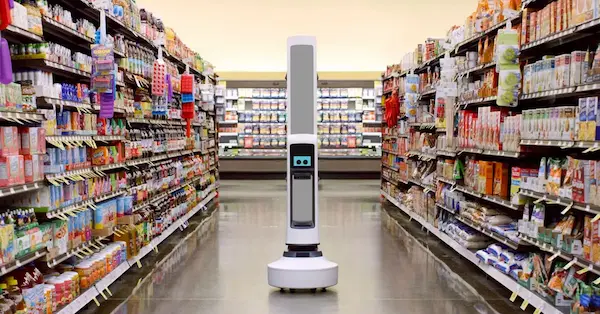
Laser-based distance correction ensures safe operation around moving forklifts, conveyors, and inventory systems.
Industrial Automation & Process Control
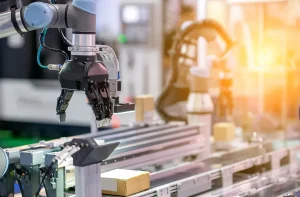
Laser modules maintain accuracy during rapid dynamic changes, supporting packaging lines, assembly stations, and quality inspection.




Expert Commentary: Future Trends in Distance Measurement
Several trends are reshaping the automation sensing landscape:
1. Miniaturization of Industrial Laser Modules
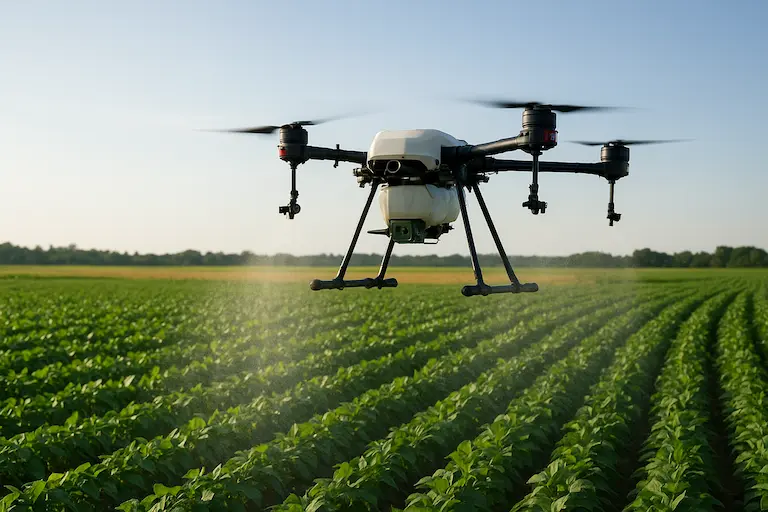
New TOF modules continue to shrink, enabling smaller AGVs, drones, and compact robotic systems.
2. Higher Sampling Frequency
Essential for high-speed warehouse robotics and next-generation AMRs.
3. Stronger Outdoor & Ambient-Light Performance
Industrial TOF modules now achieve reliable stability under sunlight, making them suitable for mixed indoor-outdoor logistics.
4. Growing Demand for OEM/ODM Customization
Manufacturers increasingly require tailor-made sensors for specific robots, AGVs, or industrial machines—driving growth in custom laser module suppliers across Asia.
Conclusion
Laser measurement technologies—especially TOF-based systems—are becoming essential components in automated industrial environments. While ultrasonic and radar solutions retain niche advantages, laser sensors dominate applications that require accuracy, high speed, and reliable performance.
For automation engineers, integrators, and manufacturers, a clear understanding of these technologies enables more informed system design, safer operation, and higher efficiency. TOF-based compact laser modules, such as those widely deployed in AGV/AMR and robotic platforms, continue to define the performance benchmark for modern automation.
FAQ
-
What is the most accurate distance measurement method for automation?
Laser sensors—especially phase-based and TOF laser—typically provide the highest precision.
-
Is laser better than ultrasonic in industrial automation?
Yes. Laser distance sensors offer better accuracy, faster response, and stronger material compatibility.
-
When should radar be chosen instead of laser?
Radar is ideal for dusty, foggy, or harsh outdoor environments where penetration is required.
-
Is TOF or phase-based laser sensing better for AGVs?
TOF is preferred due to its long range, robustness, and high-speed sampling.
-
Can laser sensors operate under strong sunlight or outdoor conditions?
Many modern TOF modules include ambient-light suppression, enabling outdoor operation.
-
Are compact laser sensors suitable for robotics?
Yes. Small TOF modules are widely used for robot navigation, distance feedback, and safety control.